
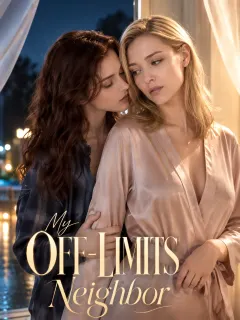
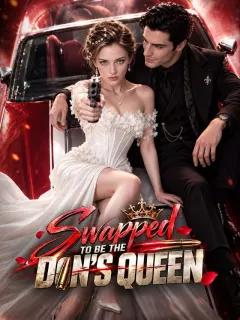
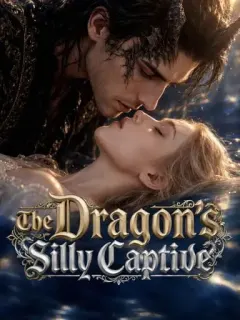
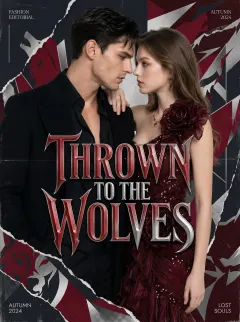
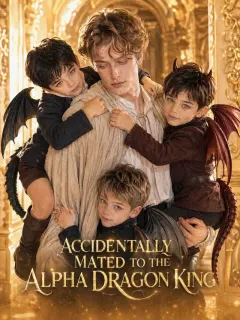
Are AI dramas real? Mostly not in the sense of filmed footage: the faces, voices and sets are produced with generation tools, so no cast ever stood in front of a camera. The series themselves are real, finished productions with a beginning and an end, which is usually what people want to know when they worry about scams or clip farms. Telling generated characters from filmed actors is harder than it sounds, because the tools improve every few months. This guide sets out what a viewer can check as of late 2026: signs on screen, credits and series pages, what platforms say about themselves, how voices and dubbing fit in, and why the answer matters to some viewers and not to others.
Are AI dramas real people?
The question hides two meanings. Some viewers want to know whether the performers are filmed human beings, while others wonder whether the drama is a legitimate production at all, as opposed to a stitched-together clip account with no real story behind it. Keeping those apart removes most of the confusion, because each one has a different answer and a different way of being checked. A viewer who finds a dramatic clip on social media and wonders who the actress is may be asking the first question, while someone about to enter card details is usually asking the second.
For the first meaning, an AI drama has generated characters, so the cast is not a group of filmed actors, and nobody auditioned for the lead. For the second, a series on an official platform is a complete product, with episodes in order, a clear start and an ending, which is why it is worth learning where the complete versions live; the Watch Short Dramas Online: Where to Find Them guide covers that. A convincing face on a phone screen is therefore no sign of a human behind it, and no sign of a fake story either. A series that arrives with a title page, a numbered episode list and a platform behind it is a real product even when every face in it was generated.
What signs on screen show AI actors in dramas?
Some viewers watch for small tells: hands and jewelry that change shape between shots, background faces that look smeared, clothing whose pattern shifts, or a lead whose look drifts a little from one scene to the next. Fast cuts, tight close-ups and dim lighting hide such flaws, which is one reason vertical dramas lean on faces filling the whole frame. Skin that looks very smooth, or movement that feels slightly floaty during a walk or a slap, is another thing people mention, along with lip movement that does not quite match the words, or eyes that hold the same stare for too long. Lighting that stays identical across scenes, and rooms that look too tidy or too empty, are mentioned too.
Treat every one of these as a hint, never as proof. Generation tools improve quickly, so a flaw that was common last year may be gone now, which makes old advice about counting fingers unreliable, and a filmed show can also have odd lighting, heavy retouching or a digital background. A single strange frame proves nothing, and a clip trimmed for social media can hide the very details you would want to check, whereas a pattern that repeats across many episodes says considerably more. Credits and the platform's own words remain the stronger evidence. Screenshots shared in comment threads are the weakest evidence of all, since they are cropped and compressed.
Do credits and series pages reveal whether actors were used?
Credits are the sturdier check. A filmed drama normally lists a cast with actor names, often with character names beside them, and it may name a director, a production company and sometimes a music credit too, all of which a viewer can look up elsewhere. An AI drama more often lists a creator, a studio or a writer and no performers at all, or it shows no credits beyond a title card. A series page that names a creator but no cast is therefore a useful clue, even though it is not a guarantee, since some filmed productions also keep their credits short and some platforms strip them from the player to save space on a small screen.
The description around the episode matters as well. If a platform calls its catalogue AI-generated, or its terms explain how content is produced, that statement outranks any guess drawn from a screenshot. It also helps to read the series title page slowly rather than skim it. Be wary of the opposite case: a social clip that insists a performer is a real person, with a name and a backstory, but offers no link to a credited production. Without a source, treat that claim as unverified rather than true. A practical order is to read the platform description first, the series page second and the credits third, stopping as soon as one of them gives a clear answer.
What do ShortPeak, SAGABOX and YourChannel say about AI?
The three platforms on this site are fairly open about it, and reading their own wording is quicker than studying any frame. In its terms, ShortPeak says its content is produced with AI generation tools. SAGABOX is a platform of AI-generated vertical short films and comics, so the label applies to the whole catalogue. YourChannel is a creator platform where people publish AI-generated dramas, although individual series there are not labelled one by one, which means the platform statement is the main clue, and a reasonable one, and it is the one to rely on when a particular series gives no other hint about how it was made. A platform that never mentions its method leaves nothing to quote, which is itself information.
Larger drama apps that gather many sources rarely say how each series was made, and that is where guessing goes wrong. The Is DramaBox AI? Plus DramaWave and More guide covers the best-known apps, with dates attached. A good test for any bold claim is to ask where the statement was published: a platform's terms page counts, while a comment under a repost does not. When a platform labels nothing at all, the credits on the series page are the fallback, and a series with no cast list and no source is better treated as unverified than judged by a face. To decide which of the three platforms to open first, the Best AI Drama Apps, Ranked guide puts them in order and gives a reason for each place.
Are the voices real, and why does it matter?
Voices are another place where viewers look for answers. A synthetic voice may keep an even tone, breathe in odd places or pronounce a name the same way every time, while a human recording carries small slips and room sound. Yet a human dub can sound just as flat, and plenty of filmed dramas are dubbed into English, so a voice alone settles very little. Combine it with the credits and the platform description before drawing any conclusion, and keep in mind that voice cloning and dubbing tools are common in both filmed and generated productions, so the sound of a voice says more about the studio's tools than about the cast. Machine-made subtitles are a third thing, and they say nothing about the cast.
Whether any of this matters depends on the viewer, and neither answer is the wrong one. Many people only want the tropes, the twists and the cliffhangers, and they never care who or what delivered the lines. Others prefer to support working actors, care about how a story was made, or simply dislike being unsure about what they are watching, and they are entitled to that preference. The practical habit is easy: choose a platform that is open about its method, check the series page for credits, and enjoy the story for what it is. A viewer who prefers filmed casts can skip any series page that lists no cast, while one who only wants the story can browse by trope, for example hidden identity, and ignore the question entirely.
Quick answers
Are AI dramas real people?
In an AI drama the on-screen characters are generated, so they are not filmed actors. The story is still a finished series with episodes in order. Platforms that carry AI dramas usually say so in their terms or in their own description.
How can I tell if a drama uses AI actors?
Start with the credits and the series page: a creator and no cast list is a clue, and a platform statement is stronger still. Glitches such as shifting hands or drifting faces are hints only, because filmed shows can look odd too.
Do AI dramas use real actors' faces?
Official AI dramas are built from generated characters. Treat any series or clip that claims to show a real person's face with caution, unless the platform clearly says the likeness is licensed and credited.
Is the voice in an AI drama real?
It can be either. Some series use synthetic voices, and others use recorded human voices or dubbing. A voice on its own is a weak sign, so read the platform description and the credits before deciding.
Which platforms say their dramas are AI-made?
ShortPeak says so in its terms, and SAGABOX is a platform of AI-generated vertical films. YourChannel is a creator platform for AI-generated dramas, though individual series are not labelled one by one.